
Now Reading: Tax Reforms Pushback and Revenue Crisis Threaten 2026 Fiscal Plan
-
01
Tax Reforms Pushback and Revenue Crisis Threaten 2026 Fiscal Plan
Tax Reforms Pushback and Revenue Crisis Threaten 2026 Fiscal Plan


The Nigerian Federal Government faces significant challenges in implementing its 2026 budget due to ongoing tax reform controversies and a severe revenue crisis. The Presidency is considering consolidating the 2024 and 2025 appropriation acts into a single document to address these issues.
The move to consolidate budgets follows a pattern of overlapping fiscal plans in recent years. For instance, in 2024, Nigeria effectively operated three budgets simultaneously: the 2023 budget, the 2023 supplementary budget, and the 2024 appropriation. Currently, the country is implementing both the extended 2024 budget and the 2025 budget concurrently. This complex fiscal structure has raised concerns among economists about potential implementation challenges and the difficulty of tracking and evaluating budget performance.
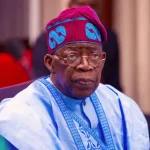
President Bola Ahmed Tinubu has requested the National Assembly to approve a “sweeping fiscal reset” by passing the Appropriation (Repeal and Re-enactment Bill-2), 2024–2025. This bill seeks to authorize a spending plan of N43.56 trillion for the 2024–2025 fiscal period, a significant reduction from the original N83.67 trillion for the two years.
The President’s proposal aims to end the practice of running multiple budgets and ensure high capital performance rates. It also seeks to strengthen implementation discipline and accountability by strictly regulating virement, requiring separate recording of excess revenue, and mandating periodic reporting.
President Tinubu is expected to present the 2026 proposed budget to a joint session of the National Assembly on Friday. The 2026 budget, estimated at N54.4 trillion, faces potential implementation challenges due to the consolidated 2024/2025 budget and the unresolved 2026–2028 Medium-Term Expenditure Framework and Fiscal Strategy Paper (MTEF/FSP). The House of Representatives recently stepped down the MTEF/FSP report due to disagreements over the oil benchmark price for 2026.
The government’s revenue crisis is a major concern, with the Minister of Finance, Wale Edun, revealing a projected revenue shortfall of N30.1 trillion for the current year. The shortfall is attributed to weak oil and gas revenues, particularly the petroleum profit tax (PPT) and company income tax (CIT).
The President’s plan to shore up federal revenue through tax reforms has faced criticism from opposition groups. The National Opposition Movement (NOM) has demanded the suspension of the reforms, warning that they could worsen poverty and social dislocation. However, the reforms aim to create a more progressive tax system, exempting low-income earners and small businesses from personal income tax.
The convergence of tax reform controversies, a significant revenue shortfall, and a complex budget structure poses substantial risks to the implementation of Nigeria’s 2026 fiscal plan. The success of the government’s efforts to stabilize the economy and ensure effective budget execution will depend on its ability to navigate these challenges and address the underlying fiscal issues.